- Oak Brook:(630) 705-9999
- Chicago:(312) 920-8822
- Email:inquiry@vervecollege.edu
- Make a Payment
 Sign up
 Login
Login
- Home
- Programs
- Admission
- Resources
- ATI Entrance Exam Resources
- New E-Digital Library
- Refer a Friend
- School Newsletter
- Events
- Employers
- Job-Network
- Alpha Beta Kappa Candidates
- Verve College Library
- Graduation and Pinning Ceremony Photo Galleries
- Textbook Information
- Career Services
- Tutoring
- School Catalog
- FAQ
- Constitution Day Program
- Alumni
- Verve College Plans
- Financial Aid
- HEERF Reporting
- Satisfactory Academic Progress
- Apply For Financial Aid
- Net Price Calculator
- Return of Title IV Funds (R2T4)
- Financial Aid Office Code of Conduct
- Contact
- FAQs
- Verification Policy
- Vaccination Policy
- Student Right-to-Know Act
- Misrepresentation
- Information Security Program
- Academic Award Year
- Availability of Employee
- Cost of Attendance
- Health & Safety Exemption Requirement
- Students Rights and Responsibilities
- Leave of Absence
- Pell Formula
- Military Students
- Grants/ Scholarship Policy
- Contact Us
- Testimonials
- Blog
Is a Nursing Career Right For You?
Take The Free Quiz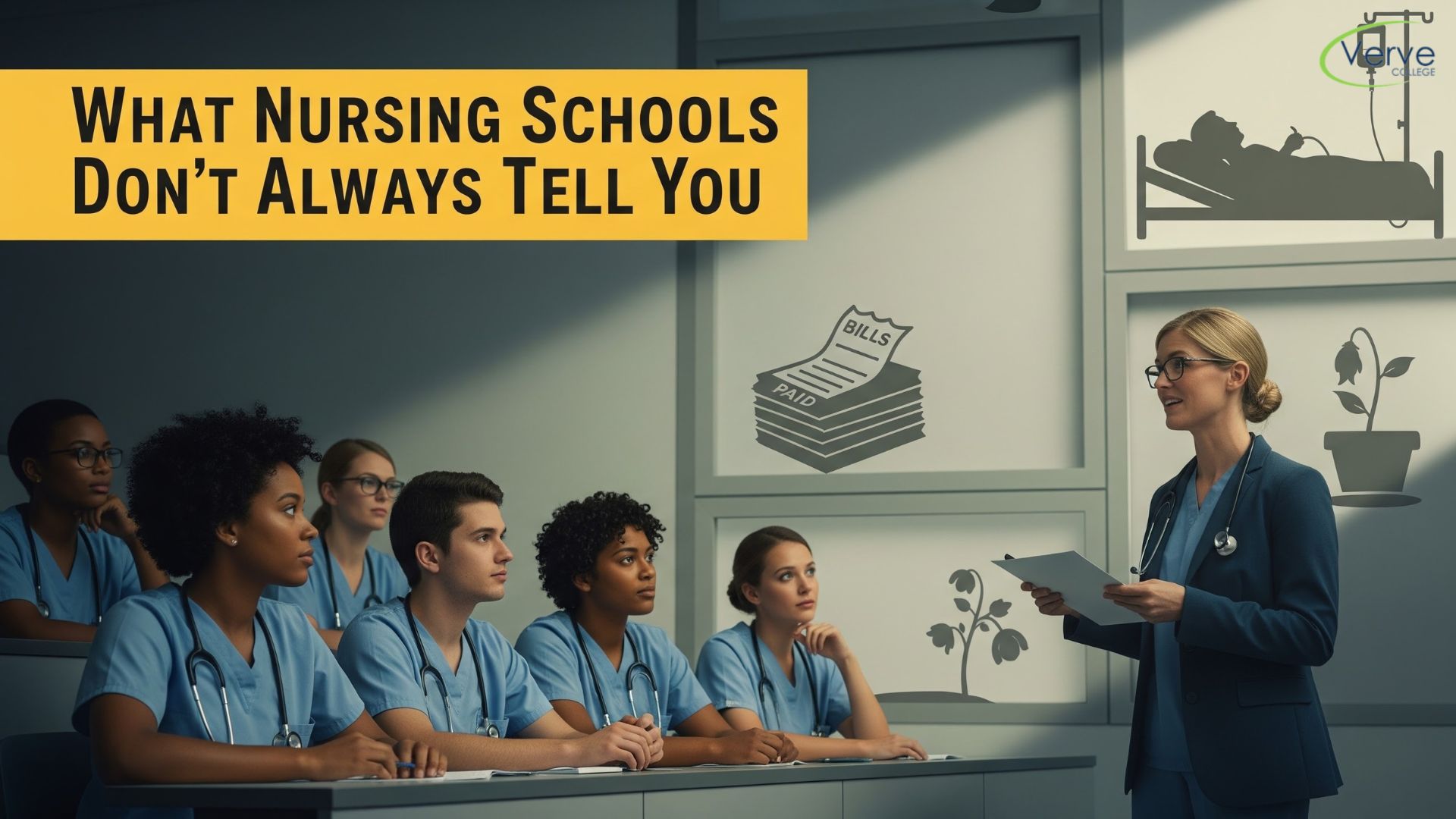
What Nursing Schools Don’t Always Tell You?
What Nursing Schools Don’t Always Tell You?
According to the U.S. Bureau of Labor Statistics, employment for practical nurses is projected to grow steadily through the next decade as healthcare demand rises. More people are entering nursing education to meet this need, yet many students discover that some realities of training and practice only become clear after classes begin. Understanding what nursing schools don’t always tell you can help future students prepare mentally, academically, and professionally before starting their journey.
Many students who explore licensed practical nurse programs in chicago focus mainly on admission requirements or tuition. While these are important, nursing education also involves emotional resilience, time discipline, and hands-on learning experiences that are rarely explained in detail during initial research.
Key Takeaways
- Nursing education requires strong time management because coursework, labs, and clinical hours often overlap.
- Emotional resilience becomes important when students begin working with real patients during clinical training.
- Practical nursing programs emphasize applied knowledge rather than memorization alone.
- Support systems such as peer groups, instructors, and mentors often determine student success.
Academic Workload Is More Intense Than Expected
Many students enter nursing programs expecting difficult coursework, but the pace can still surprise them. Subjects such as pharmacology, patient care procedures, and medical terminology must be learned quickly and applied correctly.
Unlike many academic programs, nursing education connects theory directly with practice. Students often study complex topics in the classroom and then perform related tasks during clinical practice shortly afterward. This approach ensures learning translates into real patient care situations.
The challenge is not only understanding the information but applying it accurately in a healthcare environment. Small details matter in clinical settings, which means students must develop strong concentration and organizational skills early in their training.
Emotional Strength Matters as Much as Academic Skill
During clinical rotations, students interact with patients who may be experiencing pain, illness, or long recovery periods.
Witnessing real medical situations can be a powerful learning experience. At the same time, it requires emotional balance. Nursing students learn how to remain compassionate while still maintaining professional judgment.
Programs often provide guidance and mentorship, but personal coping strategies also become important. Talking with classmates, instructors, or mentors can help students process difficult experiences and grow professionally.
Clinical Training Changes the Learning Experience
Clinical practice is where theoretical learning becomes real. Students quickly realize that healthcare environments move faster than classroom discussions.
In many nursing schools in Chicago IL, clinical training introduces students to hospitals, long-term care facilities, and community healthcare settings. These experiences teach practical communication skills, patient observation, and teamwork with healthcare professionals.
Clinical training also helps students understand how nurses collaborate with physicians, therapists, and other medical staff. This teamwork is essential for patient safety and quality care.
Students who approach clinical training with curiosity and patience often gain the most valuable experience from these environments.
Time Management Becomes a Critical Skill
Balancing coursework, clinical hours, assignments, and personal responsibilities can be challenging. Nursing programs often require structured schedules that leave little room for procrastination.
Students frequently discover that studying regularly in smaller sessions is more effective than long periods of last-minute preparation. Creating weekly study plans, organizing notes, and reviewing clinical experiences can help maintain steady academic progress.
Time management also helps reduce stress. When students plan their schedules carefully, they are better able to focus on learning rather than worrying about unfinished tasks.
Developing this discipline early is one of the most useful lessons for future nursing careers.
Support Systems Play a Major Role in Success
Students who build strong academic and emotional support systems often perform better throughout their programs.
Study groups allow students to discuss complex topics and learn from each other’s perspectives. Instructors provide guidance when concepts become challenging. Mentors in clinical settings can also share valuable professional advice.
Family support can be equally important. Encouragement from loved ones often helps students stay motivated during demanding academic periods.
By creating these connections early, nursing students can build a support network that continues into their professional careers.
Conclusion
Preparing for a nursing career involves more than academic preparation. Understanding what nursing schools don’t always tell you allows students to enter training with realistic expectations about workload, emotional resilience, and hands-on clinical learning.
Students who explore accredited lpn programs in Chicago often focus on curriculum details and admission steps. While those elements are important, long-term success also depends on discipline, adaptability, and strong support systems. Nursing education shapes not only technical skills but also communication, compassion, and professional responsibility.
By recognizing these realities early, future nurses can approach their education with confidence and preparation.
FAQs
1. Why do many nursing students struggle during their first semester?
The first semester often introduces students to multiple new subjects simultaneously, including clinical skills and theoretical coursework. Adjusting to this pace requires learning new study strategies and time management habits, which can take time to develop.
2. How can nursing students reduce stress during clinical training?
Students can reduce stress by reviewing procedures before clinical sessions, asking questions when unsure, and reflecting on each experience afterward. Building confidence through preparation often makes clinical environments easier to manage.
3. What personal qualities help someone succeed in nursing school?
Curiosity, patience, emotional resilience, and strong organization skills help students succeed. These qualities support both academic learning and effective patient communication in healthcare environments
Most Popular Blogs Posts

How LPN Training Prepares Students for…
October 5, 2026 Read More
What Is Inflammation? A Simple Guide…
October 1, 2026 Read More
What Are Synovial Joints? Types and…
September 30, 2026 Read More
What Is a Nursing Compact License?…
September 30, 2026 Read More